
Understanding the Meaning of a Trust Foundation
A trust foundation is more than a name, a logo, or a donation page. At its best, it is a promise to serve people with honesty, care, and long-term vision. Communities do not support a foundation only because it asks for help. They support it because they believe the foundation will use time, money, and effort in the right way.
A responsible charitable foundation usually works around a clear purpose. That purpose may include education, poverty relief, food support, healthcare access, family welfare, religious learning, youth development, or emergency aid. Whatever the mission may be, the most important point is simple: the foundation must serve a real public need.
In many countries, registered charities are expected to explain how their work benefits the public. For example, the UK Charity Commission says a trustees’ annual report helps people understand what a charity does, where money comes from, and how funds are spent. It also explains that registered charities must report how they carry out their purpose for public benefit.
That idea matters for every trust foundation, whether it is large or small. People want to know: Who is being helped? How is the help delivered? Who manages the funds? What results have been achieved? When these questions are answered clearly, trust grows naturally.
A strong foundation should also avoid making claims that cannot be proven. For example, saying “we changed thousands of lives” sounds powerful, but without records, photos, reports, receipts, or beneficiary feedback, it can feel empty. A better approach is to share simple, honest updates such as “50 food packs distributed in one village” or “20 students received learning materials.” Small proof is stronger than big promises.
Why Thawhiditrustfoundation Can Become a Trusted Community Name
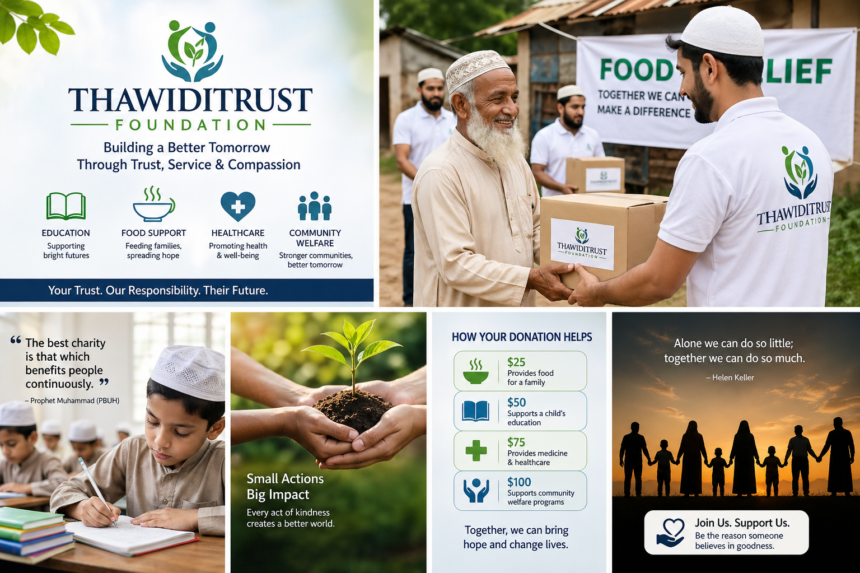
For a name like Thawhiditrustfoundation to become trusted, it must stand for service, faith, honesty, and practical help. The word “trust” carries a heavy responsibility. It tells donors, volunteers, and beneficiaries that the organization is expected to act with care.
Trust is not built overnight. It is earned step by step. A foundation can begin by defining its mission in simple language. For example, it may say that its purpose is to support needy families, improve access to education, provide emergency relief, or promote moral and social development. The clearer the purpose, the easier it becomes for people to support it.
A foundation should also explain what it does not do. This may sound unusual, but it is useful. If the foundation does not provide political support, personal loans, or unverified cash handouts, it should say so. Clear boundaries protect the organization from confusion.
The public also wants to see consistency. A foundation that posts once and disappears for months may lose attention. A foundation that gives steady updates, even small ones, appears more reliable. These updates can include monthly activity summaries, volunteer photos, donation receipts, beneficiary stories, and upcoming plans.
Public trust is closely tied to accountability. The Charity Commission has noted that its objectives include increasing public trust and confidence in charities, promoting trustee compliance, and improving accountability to donors, beneficiaries, and the wider public.
In simple words, people trust what they can understand. They support what they can verify. They remember organizations that communicate with respect.
Core Values Every Responsible Foundation Should Follow
A charitable foundation should be guided by values, not just activities. Values shape decisions when no one is watching. They also help volunteers and trustees act in the same direction.
The first value is transparency. Donors should know how money is received and spent. This does not mean every private detail must be published, but basic financial clarity is important. A simple monthly report can show total donations, total expenses, and remaining balance.
The second value is accountability. Someone must be responsible for decisions. Trustees, managers, or committee members should have defined roles. One person may manage records, another may verify beneficiaries, and another may handle communication.
The third value is fairness. Aid should be distributed based on need, not personal favoritism. A foundation can create simple criteria for support, such as income level, family size, medical need, disability, or emergency condition.
The fourth value is dignity. People receiving help should never feel embarrassed. Photos and videos should be shared only with permission. Beneficiaries are not marketing tools. They are human beings who deserve respect.
The fifth value is sustainability. A good foundation should not depend only on emotional fundraising. It should build repeat donors, community partnerships, and long-term programs.
BBB Wise Giving Alliance evaluates charities using standards related to governance, finances, results reporting, and transparency, showing how important these areas are for public confidence.
Community Development and Human Support
Community development begins with listening. A foundation should not assume what people need. It should ask, observe, and verify. Some communities may need food support. Others may need school supplies, clean water, medical help, counseling, skill training, or religious education.
Food support is often the first area many foundations focus on because hunger is urgent. However, long-term support should go beyond food. Education can change a child’s future. Skill training can help a parent earn income. Health awareness can prevent serious problems. Family counseling can reduce conflict and protect children.
A practical foundation can divide its work into three types:
| Support Area | Example Activity | Long-Term Benefit |
|---|---|---|
| Emergency relief | Food packs, medicine, urgent cash aid | Reduces immediate suffering |
| Education support | Books, fees, uniforms, tutoring | Builds future opportunity |
| Community welfare | Counseling, awareness, volunteer care | Strengthens families |
The best foundations understand that small actions matter. A notebook for a child, a warm meal for a widow, or a transport fare for a patient may seem small, but to the person receiving help, it can mean the world.
Governance and Leadership Structure
Governance is the backbone of a foundation. Without good governance, even good intentions can fall apart. A foundation needs clear leadership, written rules, and careful decision-making.
Trustees should understand their duties. They should not treat foundation money as personal money. They should approve expenses, keep records, and review major decisions. Volunteers should also know their roles. Confusion often begins when everyone wants to help but no one knows who is responsible.
A basic governance structure may include:
| Role | Main Duty |
|---|---|
| Chairperson | Leads meetings and guides direction |
| Treasurer | Manages financial records and reports |
| Secretary | Keeps documents, minutes, and communication |
| Program Lead | Plans and manages activities |
| Volunteer Team | Helps with fieldwork and delivery |
Written policies are also helpful. A foundation should have rules for donations, expenses, beneficiary selection, volunteer behavior, safeguarding, and complaint handling. These documents do not need to be complicated. Even a few clear pages can prevent many problems.
Financial Transparency for Donor Trust
Money is one of the most sensitive parts of charitable work. Even a small mistake can damage trust. That is why financial transparency must be treated as a priority from day one.
A foundation should record every donation. It should also issue receipts when possible. Expenses should be supported by bills, invoices, or written notes. If cash is used, two people should verify it. Bank transfers are usually easier to track than cash.
In the United States, the IRS explains that charitable organizations may have disclosure duties, including written disclosure for certain quid pro quo contributions over $75. It also explains that many tax-exempt organizations must make key annual returns and exemption applications available for public inspection.
Even when a foundation is not under the same rules, the principle is useful: clear records protect both the donor and the organization.
A simple financial update can include:
| Month | Donations Received | Program Expenses | Admin Expenses | Balance |
|---|---|---|---|---|
| January | $2,000 | $1,500 | $200 | $300 |
| February | $1,700 | $1,200 | $150 | $650 |
This type of reporting helps donors see that funds are being handled carefully. It also helps leaders make better plans.
Digital Presence and Public Awareness
In today’s world, a foundation’s digital presence is often the first place people look. A website, Facebook page, Google profile, or LinkedIn page can help the public learn about the mission. But digital presence must be professional and honest.
A good website should include:
- Mission statement
- Program details
- Donation method
- Contact information
- Leadership or trustee information
- Reports and updates
- Privacy and safeguarding notes
Search visibility also matters. If people search for a foundation and find confusing or incomplete information, they may hesitate. A clear website with updated content can build confidence.
SEO content can help a foundation reach more donors and volunteers. Articles about charity work, community service, education support, Islamic giving, food relief, and volunteerism can attract people who care about these causes. However, SEO should never replace honesty. Ranking on Google is useful, but being trustworthy is far more important.
Volunteer Engagement and Community Participation
Volunteers are the heart of many charitable foundations. They bring energy, local knowledge, and compassion. Still, volunteers need guidance. A foundation should train them in respectful communication, safety, recordkeeping, and privacy.
Good volunteer culture includes teamwork. No volunteer should feel used or ignored. Appreciation matters. A simple thank-you message, certificate, or public recognition can motivate people to continue serving.
Volunteers should also be protected. They should not be sent into unsafe places without planning. They should not handle sensitive cases alone. They should know who to contact if a problem arises.
Community participation makes programs stronger. Local elders, teachers, imams, doctors, youth leaders, and women’s groups can help identify real needs. When the community is involved, aid becomes more accurate and respectful.
Measuring Impact with Real Results
Impact measurement does not need to be complicated. A small foundation can start with basic records. The goal is to answer one question: What changed because of this work?
Examples of measurable impact include:
| Program | Simple Impact Measure |
|---|---|
| Food support | Number of families served |
| Education aid | Number of students supported |
| Medical help | Number of patients assisted |
| Winter relief | Number of blankets distributed |
| Counseling | Number of families guided |
Stories are also powerful, but they should be shared carefully. A beneficiary story should protect privacy and dignity. Instead of exposing someone’s pain, the story can focus on hope and progress.
For example: “A widowed mother received monthly food support for three months while her son completed a skills course.” This is respectful, specific, and meaningful.
Partnerships with Schools, Mosques, NGOs, and Local Groups
No foundation can do everything alone. Partnerships help expand reach and reduce waste. A school can help identify students who need books. A mosque can help connect with families in need. A clinic can guide medical aid. Another NGO can share training or resources.
Partnerships should be written clearly. Even a short agreement can explain who does what, how funds are used, and how results are reported. This prevents confusion later.
Strong partnerships also improve credibility. When respected local groups support a foundation’s work, donors feel more confident. Still, a foundation should choose partners carefully. Shared values matter. If a partner is careless with records or disrespectful to beneficiaries, it can harm the foundation’s reputation.
Risk Management and Safeguarding
Charity work involves risk. Funds can be misused. Beneficiary data can be exposed. Volunteers can face safety problems. Children and vulnerable adults can be harmed if safeguarding is weak.
A responsible foundation should create basic safeguards. These may include volunteer screening, permission forms for photos, secure storage of donor and beneficiary data, and a complaint process.
Data privacy is especially important. A list of needy families should not be shared publicly. Medical details should be protected. Children’s images should never be posted casually.
Risk management is not about fear. It is about care. When a foundation prepares well, it protects the people it serves and the people who serve with it.
Sustainable Growth for a Charity Foundation
Sustainable growth means building programs that can continue. One-time campaigns are helpful, but long-term planning is better. A foundation should ask: Can this program continue for six months? Can donors support it every month? Can volunteers manage the workload?
Monthly giving is one strong method. Instead of asking for large donations only during emergencies, a foundation can invite supporters to give a small monthly amount. Regular donations help with planning.
Another method is program sponsorship. A donor may sponsor school supplies for 10 children, food packs for 20 families, or medicine for elderly patients. Clear sponsorship packages make giving easier.
A foundation can also build sustainability through training. Helping people earn income may reduce their need for aid. For example, sewing training, digital skills, small business support, or job readiness workshops can create lasting benefit.
Common Challenges for New Trust Foundations
New foundations often face similar challenges. The first is low awareness. People may not know the foundation exists. This can be solved through consistent communication, local events, and digital content.
The second challenge is limited funding. A foundation should not rely on one donor. It should build a wide donor base with small, regular contributions.
The third challenge is weak documentation. This can be solved with simple tools like spreadsheets, receipt books, Google Forms, and monthly reports.
The fourth challenge is volunteer burnout. Charity work can be emotional. Leaders should divide tasks fairly and avoid overloading a few people.
The fifth challenge is public doubt. Some people may ask hard questions. That is not always a bad thing. Honest questions give a foundation a chance to prove its integrity.
FAQs About Trust Foundations
1. What is the main purpose of a trust foundation?
A trust foundation exists to serve a defined public or community benefit. Its purpose may include education, poverty relief, healthcare support, religious learning, family welfare, or emergency aid.
2. How can a foundation build donor trust?
A foundation can build donor trust by keeping clear records, sharing regular updates, issuing receipts, publishing activity reports, and showing real results without exaggeration.
3. Why is transparency important in charity work?
Transparency helps donors and communities understand how funds are used. It also protects the foundation from suspicion and supports better decision-making.
4. Should a small foundation publish reports?
Yes, even a simple report is useful. A monthly or quarterly update showing donations, expenses, activities, and impact can make a big difference.
5. How can volunteers help a trust foundation grow?
Volunteers can help with fundraising, field visits, food distribution, teaching, social media, recordkeeping, event planning, and community outreach.
6. What should donors check before giving?
Donors should check the foundation’s mission, contact details, public updates, financial clarity, leadership information, and proof of past activities.
Conclusion
A foundation becomes strong when its mission is clear, its records are honest, and its service is consistent. Good intentions are a beautiful beginning, but structure, transparency, and accountability turn those intentions into lasting impact.
Thawhiditrustfoundation can grow into a meaningful community name by focusing on real needs, protecting donor trust, respecting beneficiaries, and measuring results with care. When a foundation serves with sincerity and manages resources wisely, it does more than deliver aid. It builds hope, dignity, and a better future.